
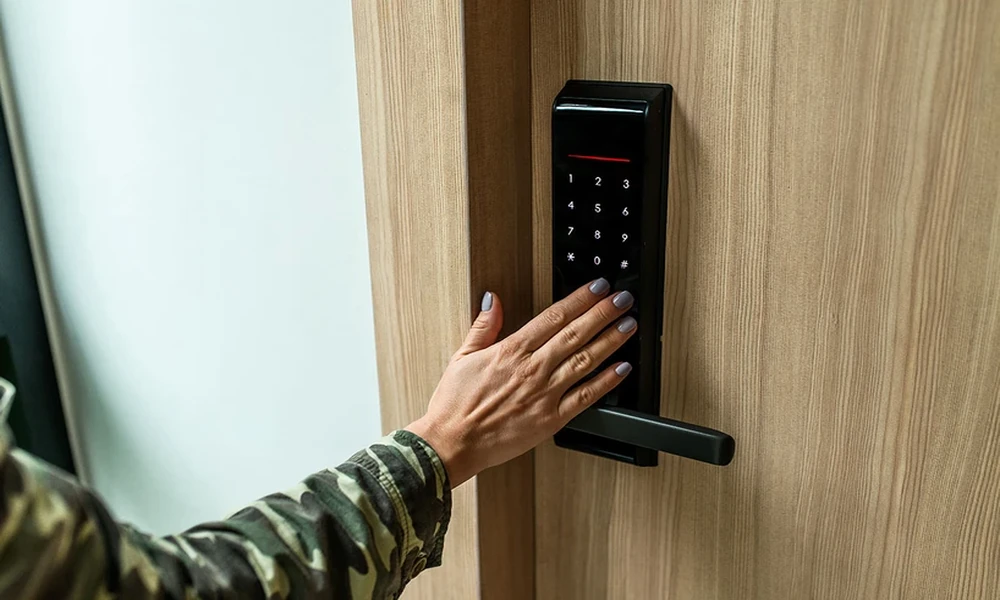
For many years, conventional locks have safeguarded residential, commercial, and office buildings. However, as companies grow, organizations implement flexible schedules, and property owners want more control over building access, current security standards have become more complicated. Physical keys are still helpful, but they have drawbacks including loss, duplication, illegal access, and poor monitoring. Organizations have been prompted by these worries to investigate more intelligent entry management systems that provide more security, ease, and flexibility.
By enabling authorized people to enter buildings via digital credentials, electronic cards, PIN codes, or mobile apps, modern keyless entry systems provide an alternative to traditional locking techniques. These solutions assist property managers in managing permissions, keeping an eye on entrance activities, and improving control over restricted areas in addition to doing away with the need for actual keys.
Recognizing The Drawbacks Of Conventional Locking Systems
Although mechanical locks provide a simple way to secure doors, their limits become more apparent in settings with a large number of workers, contractors, and guests. It may be challenging to manage physical keys across many departments, particularly when access needs are constantly changing.
Because property owners may not always be able to detect the presence of illegal copies, lost or stolen keys raise extra issues. It might take a lot of time and money to replace locks or rekey many doors.
Detailed access records are often absent from traditional locking methods. It might be difficult to determine who accessed a certain place and when without electronic surveillance. Because of these drawbacks, traditional locks are less appropriate for establishments that need close security monitoring.
Smarter Access Permissions And Digital Credentials
The use of digital credentials in place of traditional keys is one important development in entry management. Individuals may be authenticated via electronic access systems using biometric verification, mobile devices, proximity cards, or personal identity numbers.
Administrators may allocate certain rights depending on employee duties, working hours, or security clearance levels using digital credentials. For instance, administrative staff may be permitted to visit certain office spaces, while maintenance staff may have access to equipment rooms during planned shifts.
It is often possible to change or cancel these rights without having to replace the actual locking hardware. When workers switch jobs, contractors finish tasks, or temporary guests need restricted access, this flexibility becomes very important.
Enhancing Security By Monitoring Real-Time Access
Controlling whether a door opens is just one aspect of modern entry management. Activity logs are another feature that many electronic security solutions provide to assist businesses in understanding how their facilities are being accessed.
Credential identification, entry timestamps, and failed authentication attempts are examples of access records. Security administrators may examine this data to look into anomalous behavior or spot any flaws in current protocols.
Automated alerts may also be supported by sophisticated keyless entry systems in the event that doors are left open for longer than allowed or when illegal access attempts take place. These characteristics may raise awareness and make it possible for security personnel to react more quickly.
However, proper system design, dependable connection when needed, and explicit access data regulations are necessary for successful monitoring.
Encouraging Shared Facilities And Flexible Workplaces
Employees with varying schedules, visiting specialists, and outside service providers are often accommodated in modern companies. Using typical keys to manage these configurations may result in needless administrative labor.
By enabling permits to match individual schedules and responsibilities, electronic entry management streamlines access coordination. Organizations may set distinct access levels for various departments, limit accessibility outside of authorized hours, and give guests temporary credentials.
Centralized access management may also be advantageous for shared commercial properties. While letting each renter govern access to their assigned areas, property managers may have authority over shared entrances.
This strategy encourages operational flexibility without necessitating unhindered mobility throughout the site.
Combining Other Security Technologies With Entry Management
Integrating electronic access solutions with appropriate security architecture may increase their efficacy. A better coordinated approach to property security might be achieved by combining building automation technology, visitor control platforms, alarm systems, and surveillance cameras.
An access event, for example, may be linked to pertinent camera video, assisting security staff in reviewing activities as needed. In order to detect possibly suspicious entrance attempts, certain systems may also work in tandem with alarms.
To guarantee compatibility, cybersecurity protection, and reliable operation during network outages or power outages, integration should be properly designed.
Conclusion
Going beyond conventional locks offers a chance to enhance daily access control as well as physical security. Conventional locking systems are unable to offer some features, such as activity tracking, digital credentials, adjustable permissions, and integrated security technologies. Property owners may ease the difficulties of controlling building access while creating safer, more flexible settings by choosing suitable technologies and upholding efficient security protocols.
