
The question of how strong a 3D-printed part truly is goes far beyond the choice of material. While modern additive manufacturing technologies can create components capable of surviving intense mechanical and thermal loads, the final strength of any Fused Deposition Modeling (FDM) print is the result of a complex interplay between material selection, design orientation, and precise machine calibration. Unlike traditional manufacturing, where a part is monolithic, an FDM print is inherently anisotropic—composed of thousands of fused layers. Understanding and mitigating the weaknesses introduced by this layered structure is the key to creating durable, reliable parts using any 3D printer. This comprehensive guide explores the primary factors that determine the ultimate mechanical properties of your finished components.
The Foundation: Material Selection and Inherent Properties
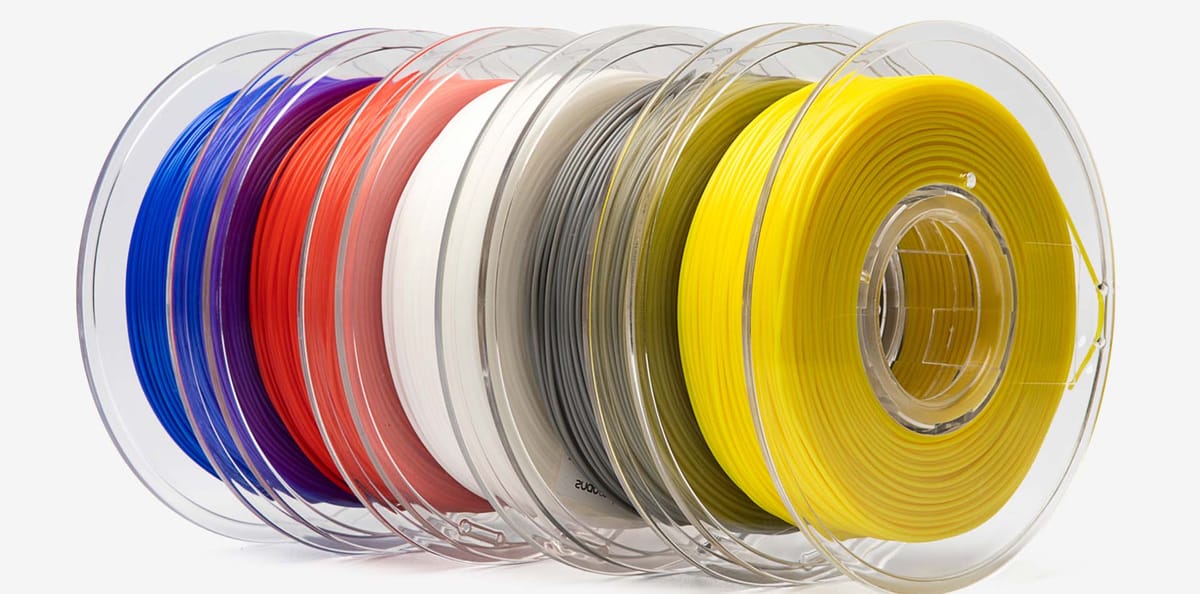
The intrinsic strength, stiffness, and durability of a component are first dictated by the raw 3D printer filament chosen for the job. Different polymers offer vastly different mechanical ceilings.
Standard Materials: Materials like PLA (Polylactic Acid) offer moderate stiffness and high tensile strength but typically lack the impact resistance and heat deflection needed for demanding applications. PETG (Polyethylene Terephthalate Glycol) offers a significant step up, providing excellent impact resistance and better layer adhesion, making it a reliable general-purpose engineering plastic.
High-Performance and Engineering Filaments: For applications requiring true durability, materials like ABS (Acrylonitrile Butadiene Styrene) and ASA (Acrylonitrile Styrene Acrylate) are often preferred due to their high toughness and ability to withstand high temperatures. Nylon and Polycarbonate offer the highest levels of structural strength, flexibility, and heat resistance, but demand high processing temperatures and meticulous environmental control within the 3D printer’s build chamber.
Composite Filaments: The addition of reinforcing fibers, such as carbon fiber or glass fiber, into a polymer matrix (like Nylon or PETG) dramatically increases stiffness and strength. These composites effectively redistribute loads and prevent crack propagation, leading to parts with properties that rival some metal alloys, provided the 3D printer is equipped with a wear-resistant nozzle to handle the abrasive fibers.
Printing Parameters and Anisotropy
The orientation of the print and the settings defined in the slicing software often influence the final part strength more than the material choice itself. This is primarily due to anisotropy, the characteristic weakness along the Z-axis where layer bonds are created.
Optimizing Part Orientation for Maximum Load
The way a part is oriented on the build plate dictates the direction of the layer lines relative to the expected applied load. This is the single most important design choice affecting functional strength. If a part is intended to resist bending or tension along a certain axis, that force should be applied parallel to the print layers (X-Y plane), not perpendicular to them (Z-axis). For example, a cantilevered bracket designed to hold weight should be printed on its side so the layers run along the length of the bracket, maximizing the cross-sectional area of the layer bond.
The Critical Influence of Shells and Infill
For most printed parts, the outer walls (or “shells”) carry the majority of the load. Increasing the number of perimeter shells from two to four dramatically boosts the rigidity and impact resistance of the component without drastically increasing print time.
The infill percentage determines the material density inside the part. While a infill might sound strongest, it often only provides marginal gains over to infill and consumes significantly more time and 3D printer filament. More critical than density is the infill pattern:
- Rectilinear or Grid: Good for compression.
- Honeycomb or Cubic: Excellent for isotropic strength and stability under various loads.
- Triangular: Best for resisting stress in certain directions.
Layer Fusion: Temperature and Extrusion Optimization
Successful layer-to-layer bonding is the cornerstone of 3D print strength. The extrusion temperature must be set correctly; printing slightly hotter (near the high end of the filament’s recommended range) improves the polymer’s flow and allows the plastic to fuse more thoroughly with the previous layer.
Furthermore, ensuring a perfect “squish” on the first layer and slightly over-extruding the filament can help. A higher flow rate ensures that enough molten plastic is available to merge chemically and physically with the preceding layers, minimizing air gaps and maximizing the contact surface area between layers. The optimal performance of the 3D printer in delivering this consistent flow is essential.
Post-Processing Techniques for Enhanced Durability
Even after a successful print, there are techniques that can dramatically improve the final strength and durability of the component by addressing the inherent layer-line weaknesses.
Chemical and Thermal Treatments for Ultimate Strength
Certain materials, like ABS and ASA, can be exposed to solvent vapors (such as acetone vapor). This process chemically melts the outer layers, effectively fusing the individual print lines together and virtually eliminating layer separation. The result is a nearly monolithic part with vastly improved mechanical strength, smoother aesthetics, and water-tight properties.
For other high-performance materials, like Nylon, annealing (a controlled heat treatment) is often used. This process involves heating the printed part in an oven to just below its melting point for a specified period, allowing the internal polymer chains to relax and re-crystallize. Annealing significantly improves the material’s strength, stiffness, and heat deflection temperature, locking in the final dimensions.
Protective Coatings and Infiltrations
Applying high-strength epoxy or polyurethane coatings can add a hardened outer shell, protecting the part from abrasion, moisture, and chemical exposure. For parts designed to be hollow or porous, polymer infiltration involves filling the internal voids with a low-viscosity resin. This technique dramatically increases the part’s density and mechanical integrity, effectively transforming the printed component into a solid composite structure.
Conclusion
The strength of a 3D-printed part is a variable property, not a fixed specification. It is actively determined by the operator’s ability to manage material, orientation, and thermal processes. By selecting an appropriate 3D printer filament, carefully orienting the part to align the strongest axes with the expected load, optimizing slicer parameters like shells and infill for density, and utilizing advanced post-processing techniques like annealing or chemical smoothing, users can overcome the challenges of anisotropy. Ultimately, the durability of the final component relies on a holistic, informed approach to design and manufacturing within the constraints of the FDM process.
